 Text Us Now

Missing a tooth, or even several teeth, can affect more than just your smile. It can make eating difficult, change how you speak, and even cause your remaining teeth to shift out of position. That’s where dental bridges come in as a reliable, time-tested solution. At Advocate Dental of Palatine, Dr. George Skoog helps patients restore their smiles with custom dental bridges designed to look and function just like natural teeth.
How Does a Dental Bridge Work?
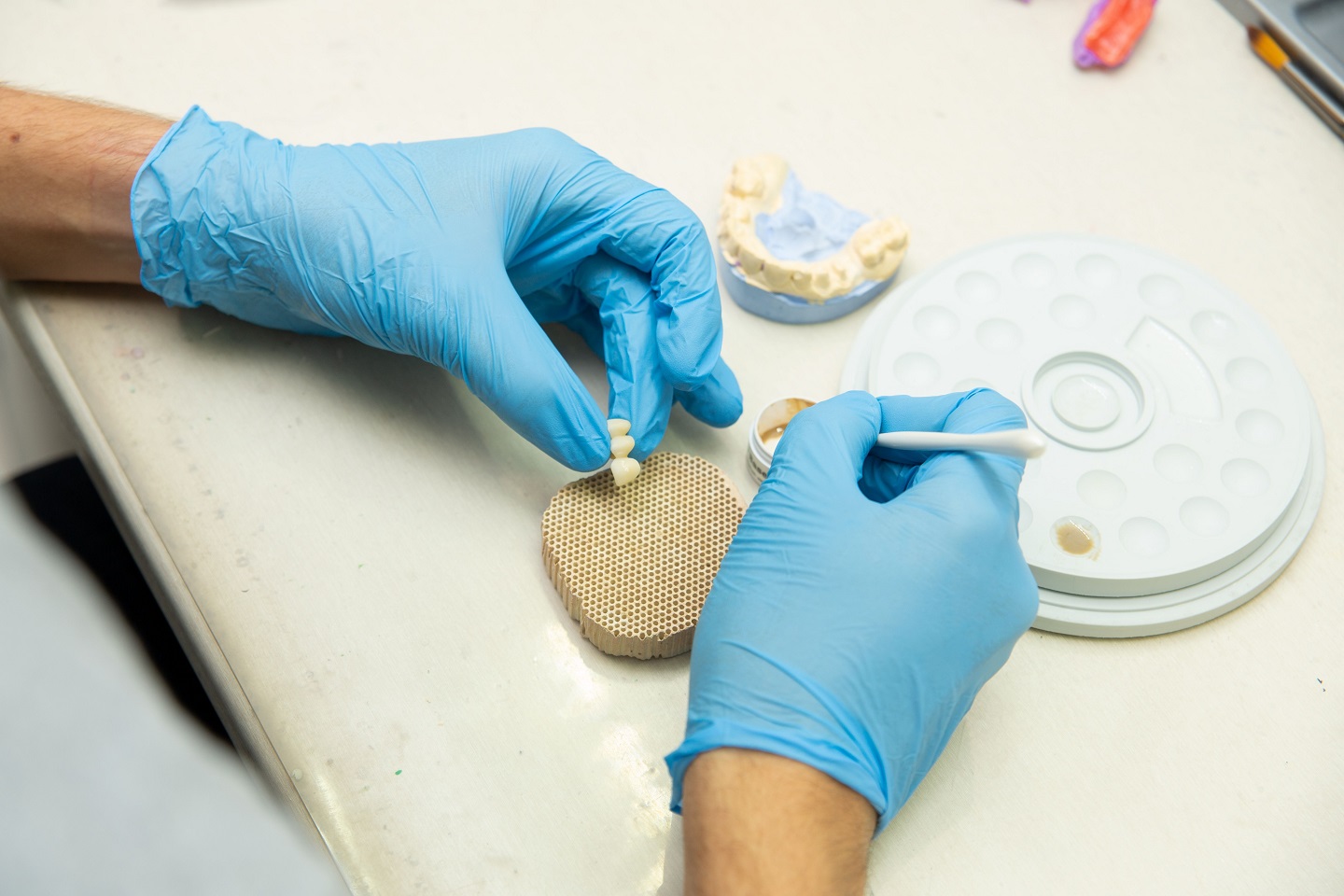
A dental bridge literally “bridges” the gap created by one or more missing teeth. The restoration consists of artificial teeth (called pontics) that are held in place by crowns attached to the teeth on either side of the gap. These supporting teeth are called abutment teeth. The result is a seamless restoration that fills the space, restores your bite, and helps maintain the structure of your face and jaw.
When you choose a bridge for missing tooth replacement, you’re not just improving aesthetics; you’re protecting your oral health. Without a replacement, neighboring teeth can drift into the empty space, creating bite problems and increasing your risk for gum disease and tooth decay.
Types of Dental Bridges
Not all dental bridges are created equal. Depending on your specific situation, Dr. Skoog may recommend one of these types of dental bridges:
Traditional Bridges
The most common type, traditional bridges use dental crowns on the teeth adjacent to the missing tooth. These crowns anchor the pontic (artificial tooth) securely in place. Traditional bridges work well when you have healthy natural teeth on both sides of the gap.
Cantilever Bridges
When you only have teeth on one side of the missing tooth, a cantilever bridge may be the solution. This type is anchored to just one adjacent tooth, making it ideal for certain situations, though it’s typically used in areas of the mouth that don’t experience heavy chewing pressure.
Maryland Bridges
Also called resin-bonded bridges, Maryland bridges use a metal or porcelain framework bonded to the back of adjacent teeth. This option is more conservative because it doesn’t require crowns on the supporting teeth, though it may not be as strong as traditional bridges.
Implant-Supported Bridges
For patients missing several consecutive teeth, implant-supported bridges offer exceptional stability. Instead of relying on natural teeth for support, these bridges are anchored by dental implants surgically placed in the jawbone.
The Dental Bridge Procedure
Wondering what to expect during the dental bridge procedure? Here’s a general overview of the process at our Palatine office:
During your first visit, Dr. Skoog will prepare the abutment teeth by reshaping them to accommodate crowns. We’ll then take detailed impressions of your teeth, which will be sent to a dental laboratory where your custom bridge will be created. In the meantime, you’ll receive a temporary bridge to protect your teeth and gums.
At your second appointment, typically a few weeks later, Dr. Skoog will remove the temporary bridge and check the fit of your permanent bridge. After making any necessary adjustments, he’ll cement the bridge into place, giving you back a complete, functional smile.
Is a Dental Bridge Right for You?
The best way to determine if a dental bridge is the right solution for your missing teeth is to schedule a consultation with Dr. George Skoog at Advocate Dental of Palatine. We’ll evaluate your oral health, discuss your goals, and create a personalized treatment plan that fits your needs and budget.
Ready to restore your smile? Call our Palatine office at (847) 359-8732 to schedule your appointment today. We’re here to help you achieve a healthy, complete smile that lasts for years to come.







Leave A Comment
You must be logged in to post a comment.